Euro 7: what the new standard changes for electric and hybrid cars
The Euro 7 standard comes into force for new car models at the end of November 2026. For the first time, it regulates brake particles and battery durability. Here is what it means for electric and hybrid cars.
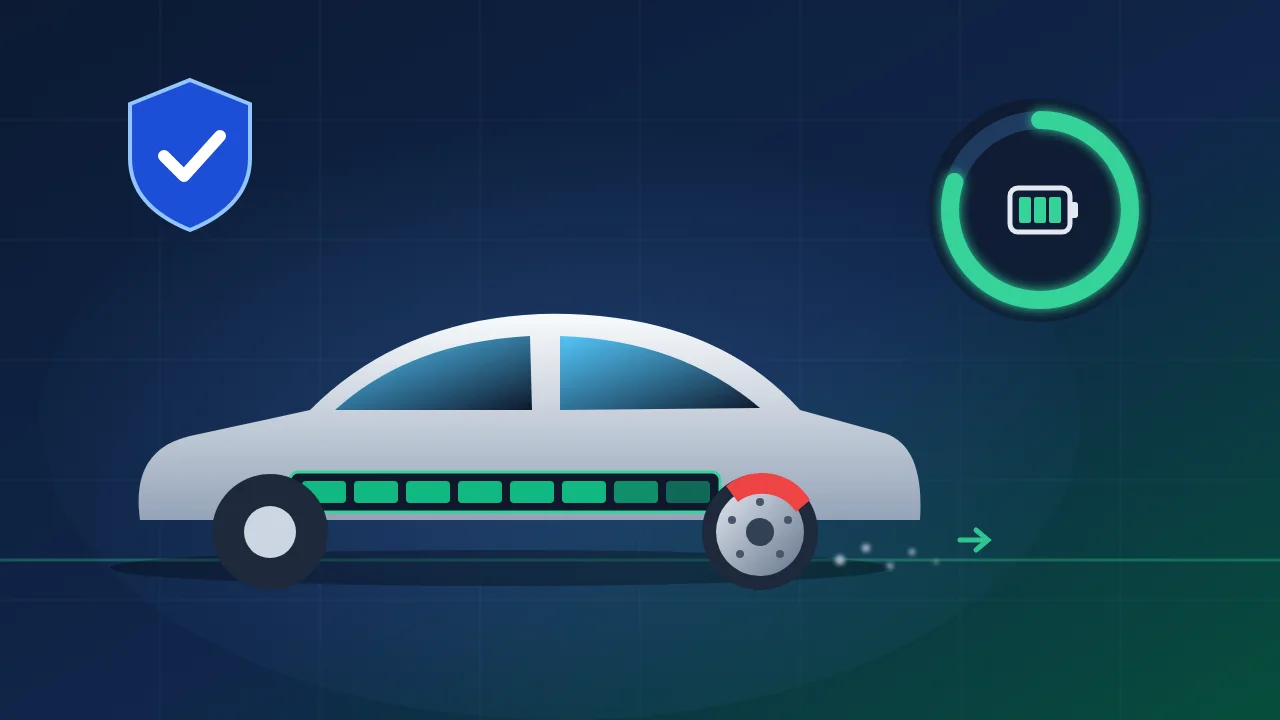
Since the first Euro standard in 1992, European emission rules have focused on what comes out of the exhaust pipe. Euro 7, adopted by the European Union in 2024, marks a turning point: it is the first standard that also applies to cars without an exhaust, because it regulates brake particles and the durability of batteries.
When does Euro 7 apply?
The standard is being introduced in two stages for cars and vans:
- From 29 November 2026 for new vehicle types submitted for approval;
- From 29 November 2027 for all new cars and vans registered.
Vehicles already on the road are not affected: Euro 7 does not require any modification to existing cars.
Exhaust emissions: few changes for cars
For petrol and diesel passenger cars, the exhaust limits remain close to those of Euro 6. The main changes concern the test conditions, which cover a wider range of real driving situations, and the measurement of smaller particles. The real novelties are elsewhere.
Brake particles: a world first
When you brake, friction between the pads and the discs releases fine particles into the air. As exhaust emissions have fallen, this "non-exhaust" pollution has become a significant share of the particles emitted by road traffic.
Euro 7 sets, for the first time, a maximum level of brake particle emissions per kilometre. Fully electric cars benefit from a lower limit, because they brake much less with their friction brakes thanks to regenerative braking. Limits on tyre abrasion will follow, once the measurement methods being developed at international level are finalised.
Minimum battery durability
This is probably the most important point for future buyers of electric and plug-in hybrid cars. Euro 7 requires the traction battery of a car to retain at least:
- 80% of its initial capacity after 5 years or 100,000 km;
- 72% of its initial capacity after 8 years or 160,000 km.
Cars will also have to be able to monitor and report the state of health of their battery. This information will be valuable for owners and, above all, on the used car market, where battery health is the main concern of buyers.
What changes for hybrids?
Hybrid and plug-in hybrid cars combine both worlds: they must comply with the exhaust requirements of their combustion engine, the brake particle limits and, for plug-in hybrids, the battery durability requirements. Regenerative braking helps them reduce brake wear and particle emissions.
Will cars become more expensive?
For electric cars, the impact on price should be limited: most recent models already offer battery warranties of 8 years or 160,000 km, and battery health monitoring is often available. Some manufacturers will adapt their braking systems, for example with low-emission pads or coated discs. For combustion cars, the cost of compliance is mainly related to emission control systems and testing.
Good news for buyers
By guaranteeing a minimum battery durability and making battery health information more transparent, Euro 7 strengthens confidence in electric cars, especially second-hand ones. It also reminds us that the environmental impact of a car is not limited to its exhaust: brakes and tyres matter too, and electric cars have a real advantage in this area thanks to regenerative braking.